The Ultimate Showdown: Samsung F6000F Led Tv vs Lg B5 for 2026
Introduction
Choosing a television in 2026 means balancing picture quality, smart features, input options for gaming, and long-term value. Two models that often appear in comparative shopping lists are the Samsung F6000F Led TV and the LG B5. These represent different design philosophies: Samsung’s LED-driven approach that focuses on brightness and value, and LG’s B-series (B5) philosophy centered on deep contrast and cinematic image quality. This article evaluates both TVs across the most meaningful real-world criteria so buyers can decide which one best fits their living room, gaming den, or home theater.
How this comparison is structured
The analysis covers design and build, picture performance, HDR and color handling, motion and gaming performance, smart platform and usability, audio, connectivity and ports, and real-world use cases. Each model receives a focused review and a clear list of pros and cons. A side-by-side comparison table follows, and a buying guide helps readers match features to common buyer priorities.
Samsung F6000F Led TV — Detailed analysis
Design and build
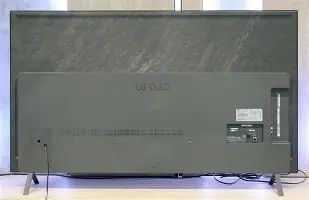
The Samsung F6000F leans into a practical, mainstream design. It typically features a slim bezel, a sturdy stand option suited for living rooms, and a finish intended to blend with modern décor. Samsung tends to prioritize a neutral look that won’t distract from the display, and the F6000F follows that approach: unobtrusive, reliable, and designed for wide consumer adoption rather than high-end craftsmanship.
Picture quality and panel characteristics
As an LED TV, the F6000F usually offers stronger peak brightness than midrange OLEDs, which benefits rooms with a lot of ambient light or windows. The panel likely uses a VA or similar LCD matrix that provides good native contrast and punchy mid-tone contrast. Samsung’s processing often emphasizes vivid color and clarity, and the F6000F typically includes upscaling and picture enhancement algorithms to improve lower-resolution content.
HDR performance
In bright scenes and HDR highlights, the F6000F’s backlight performance helps it produce appealing specular highlights. HDR experience may not rival OLED in shadow-level detail, but in bright-room scenarios the Samsung can maintain dynamic punch. Samsung’s TVs commonly support standard HDR formats and deliver most content with an emphasis on impactful highlights.
Motion, upscaling, and gaming
Samsung invests in motion interpolation and upscaling. For sports and fast-moving content, the F6000F is likely to handle motion well with available picture modes that reduce blur and judder. Gamers should check the specific input-lag numbers for their panel size, but Samsung models in this range typically offer a low-latency Game Mode, variable refresh technology compatibility, and responsive performance for consoles and PC gaming.
Smart TV platform and ecosystem
Samsung’s smart platform emphasizes an intuitive interface, app ecosystem, and compatibility with voice assistants and smart-home features. For buyers who want a straightforward TV streaming experience with frequent app availability and a polished interface, the F6000F will usually fit the bill. Samsung’s Smart Hub is designed for everyday users who want easy access to streaming services and simple content discovery.
Audio and real-world listening
Speakers in midrange LED TVs are functional for general viewing—dialogue clarity for news, streaming shows, and background music—but heavy viewers of action movies or immersive soundtracks should plan on external audio (soundbar or AV receiver). The F6000F commonly provides basic sound modes, and may include eARC support for streamlined connection to modern audio devices.
Shop the latest TVs & Home Theater picks on Amazon.
Browse Now →Real-world use cases
The Samsung F6000F is a sensible pick for bright living rooms, family rooms, or spaces where a balance of value and solid HDR highlights are important. It often appeals to households that stream diverse content, watch daytime television, or enjoy sports and network broadcasts in well-lit environments.
Pros & Cons — Samsung F6000F
- Pros:
- High peak brightness for bright rooms and HDR highlights
- Robust upscaling and motion processing for varied content
- Accessible smart platform with wide app support
- Typically strong value for the features offered
- Cons:
- Black levels and infinite contrast not on par with OLED
- Speakers are adequate but may lack depth for movies
- Viewing angles can be limited compared with OLED or higher-end IPS panels
LG B5 — Detailed analysis
Design and build
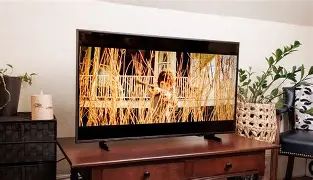
The LG B5 sits firmly in the OLED lineage and typically presents a sleek, minimalist aesthetic with very thin bezels and a slim profile. LG’s B-series is aimed at buyers who want high-end picture quality without entering the absolute premium price tier. The B5’s build caters to cinephiles and design-conscious buyers who prefer a TV that reads as a centerpiece in a darkened home theater or understated living room.
Picture quality and panel characteristics
LG’s B-series OLED panels are known for perfect blacks and outstanding contrast because each pixel can switch off individually. This translates into exceptional shadow detail and an immersive cinematic image in dark-room viewing. Color reproduction tends to be accurate and natural, and the perceived contrast gives an impression of depth unmatched by standard LED-lit sets.
HDR performance
For HDR content, OLED excels in scenes where deep shadow detail matters—film noir, space scenes, candlelit interiors—and the LG B5 capitalizes on that strength. Peak highlight brightness in OLED historically lags behind high-output LED panels, but improvements over the years have closed the gap sufficiently for most viewers. The B5’s HDR performance is characterized by nuanced mid-to-low luminance handling and accurate tone mapping that preserves detail in both bright and dark areas.
Motion, upscaling, and gaming
OLED panels naturally deliver fast pixel response times, which minimize blur in fast-moving sequences. This makes the B5 strong for sports, action films, and gaming. LG’s webOS platform and display firmware commonly include low input-lag Game Modes, and OLED’s pixel response is beneficial for competitive gaming. Buyers who prioritize cinematic motion clarity and low-latency gaming often favor OLED models like the B5.
Smart TV platform and ecosystem
LG’s webOS remains one of the most polished smart-TV systems, with a focus on ease of navigation and personalization. The B5 benefits from a mature app ecosystem and features such as multi-view, picture-in-picture, and voice assistant integrations. For users who value a curated, flexible smart experience, webOS is a strong asset.
Audio and real-world listening
Like many TVs, the B5’s built-in audio works well for dialogue and everyday viewing. However, viewers who prioritize immersive audio for movies will still opt for a dedicated soundbar or AV setup. OLED’s slim profile can limit internal speaker performance, so external audio is a common complement in the real world.
Shop the latest TVs & Home Theater picks on Amazon.
View Offers →Real-world use cases
The LG B5 suits dedicated movie watchers, evening binge-watchers, and those setting up a compact home theater. It also performs well in mixed-use households where accurate color and cinematic experience are important. The B5 is particularly desirable for viewers who watch late at night or in dimly lit rooms where OLED’s contrast advantages are most apparent.
Pros & Cons — LG B5
- Pros:
- True blacks and exceptional contrast for cinematic viewing
- Wide viewing angles and consistent color off-axis
- Excellent motion performance and low input lag for gaming
- Polished webOS smart platform with flexible features
- Cons:
- Peak brightness may be lower than bright-room LED alternatives
- Potential for image retention/burn-in with static high-contrast content over many years (risk mitigated with typical mixed-use viewing)
- Generally higher price-per-inch than comparable LED models
Side-by-side comparison
The following table summarizes the key differences and helps buyers quickly identify which model aligns with their needs.
| Category | Samsung F6000F (LED) | LG B5 (OLED) |
|---|---|---|
| Panel type | LED/LCD (backlit) | OLED (self-emissive) |
| Black levels & contrast | Very good for LED; depends on local dimming | Excellent — near-perfect blacks |
| Peak brightness | Higher, better in bright rooms | Lower than brightest LEDs but improved for most HDR |
| Viewing angles | Limited (narrower off-axis) | Wide and color-stable |
| Motion handling | Strong processing; motion smoothing available | Excellent native response; minimal blur |
| Gaming | Low-latency modes available; good all-rounder | Low input lag and excellent response; ideal for gamers |
| Smart platform | Samsung Smart Hub — broad app support | LG webOS — polished UI and personalization |
| Audio | Adequate; better with external sound | Adequate; external audio recommended for movies |
| Best for | Bright rooms, sports, value-conscious buyers | Dark-room movie lovers, cinephiles, gamers seeking image quality |
Buying guide: what to prioritize in 2026
By 2026, TV buyers typically consider picture quality, content type, room environment, connectivity, and long-term software support. Use the checklist below to align purchase decisions with real-world use.
1. Room lighting and viewing environment
- If the living room is bright with large windows and strong daylight, prioritize higher peak brightness and anti-glare — LED sets like the Samsung F6000F perform well.
- For dim home theaters or evening viewing, prioritize deep blacks and contrast — OLED options like the LG B5 deliver a more cinematic experience.
2. Content type
- Sports and live broadcasts with high brightness and punch: LED is a practical choice.
- Movies, dramas, and photography enthusiasts who value shadow detail and tonal subtlety: OLED is the preferred option.
- Gaming: both can be excellent; prioritize low input lag, VRR support, and HDMI features. OLED’s response time is compelling for competitive play.
3. Viewing habits and family usage
- Households with varied content and daytime TV will benefit from Samsung’s balanced approach.
- Users who keep static UI elements on screen for prolonged periods (e.g., news tickers, channel logos) should be mindful of OLED burn-in risk and rotate content or use built-in mitigation tools.
4. Connectivity and future-proofing
- Check for HDMI 2.1 features if planning to use current-gen consoles or high-frame-rate PC gaming (4K@120Hz, VRR, ALLM).
- Look for eARC support for simplified connection to soundbars and AV receivers.
- Consider the number and placement of HDMI and USB ports relative to your streaming boxes, game consoles, and media players.
5. Smart platform and software updates
- Prefer platforms that offer regular security and app updates, a responsive UI, and easy integration with voice assistants or smart-home systems.
- Test the UI if possible — responsiveness and navigation matter for daily use.
6. Audio considerations
- Plan an external sound solution if immersive audio matters (soundbar or AV receiver). Verify whether the TV supports advanced audio passthrough like Dolby Atmos via eARC.
7. Warranty and longevity
- Check manufacturer warranty and post-warranty service options. LED panels and OLED panels age differently; inquire about policies on image retention or defective pixels.
Decision scenarios: Which one should buyers choose?
To make the choice pragmatic, align the decision to the most common buyer profiles:
- Bright, family living room: Choose the Samsung F6000F for its brightness and versatile performance for daytime viewing and sports.
- Evening movie nights and cinematic setup: Choose the LG B5 for deep blacks, wide viewing angles, and a truly cinematic picture.
- Serious gamer seeking low input lag and speed: Lean toward the LG B5 for its fast response, but verify specific gaming feature support on the Samsung if HDMI 2.1 and VRR are essential.
- Value-conscious buyer prioritizing overall utility: Samsung F6000F often presents the most balanced cost-to-feature ratio for mixed use.
Practical tips for setup and daily use
- Calibrate picture settings after purchase. Out-of-the-box modes are often oversaturated; a calibrated Movie/Cinema mode is a good starting point for accurate color.
- Place the TV to minimize direct sunlight and reflections. Even bright LED TVs benefit from controlled lighting to see shadow detail clearly.
- If choosing OLED, use screen savers and avoid static UI elements whenever possible; enable any pixel-shift or screen-protection features offered by the manufacturer.
- Invest in a quality wall mount or stand positioned for comfortable viewing height; viewing angle affects perceived contrast and color saturation significantly.
- Update firmware when available to benefit from performance and smart-platform improvements over time.
Conclusion
Both the Samsung F6000F LED TV and the LG B5 bring strong, but different, strengths to the 2026 TV market. The Samsung F6000F is a bright, versatile LED that serves well in light-filled rooms and offers a strong value proposition for families and general viewers. The LG B5, as an OLED-based contender, excels in deep blacks, wide viewing angles, and motion clarity—qualities that appeal to cinephiles and serious gamers who prioritize picture fidelity.
Ultimately, the right choice depends on the buyer’s room environment, primary content type, and tolerance for trade-offs like peak brightness versus absolute black levels. By matching those priorities to the strengths outlined above—brightness and versatility for Samsung, contrast and cinematic depth for LG—buyers can confidently pick the TV that will deliver the most satisfying viewing experience for years to come.