Is the Bar 5 0 Multibeam Still Good in 2026? Long-Term Review
It’s hard to believe how quickly the landscape of home audio has shifted over the last few years. In the world of tech, a product that is more than a couple of years old is often treated like a relic, destined for the "outdated" bin as newer models with more drivers, flashier displays, and proprietary AI-driven tuning take over the shelves. When I first brought the Bar 5.0 Multibeam into my living room back in early 2022, it was hailed as a compact powerhouse that could mimic a 3D surround sound experience without the need for a bulky subwoofer or satellite speakers. Now that we are halfway through 2026, I wanted to sit down and share my honest thoughts after living with this unit for over four years.
My journey with home theater setups has always been a bit of a compromise. Like many people living in urban apartments, I don’t have the luxury of a dedicated "man cave" or a room large enough to accommodate a full 7.1.4 Dolby Atmos system with wires snaking under rugs. I’ve always been on the hunt for the "goldilocks" piece of gear: something powerful enough to make movie night feel special, but small enough to disappear into a minimalist TV stand. The Bar 5.0 Multibeam promised exactly that. After thousands of hours of Netflix binges, gaming sessions on three different generations of consoles, and endless Spotify playlists, here is my long-term perspective on whether this soundbar still holds up in 2026.
The Initial Appeal and the "No-Subwoofer" Gamble
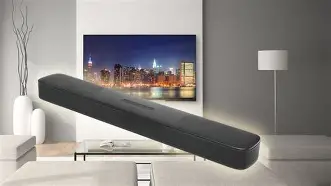
When I was first researching soundbars, I was skeptical about any "all-in-one" solution. Every audio enthusiast will tell you that physics is a difficult thing to overcome—you need a big box to move enough air for deep bass. However, the Bar 5.0 Multibeam caught my eye because of its Virtual Dolby Atmos support and what JBL calls Multibeam technology. I remember unboxing it and thinking it felt remarkably dense for its size. It didn't feel like a hollow plastic toy; it felt like a serious piece of engineering.
One thing I found immediately refreshing was the setup process. In an era where every single device requires a buggy smartphone app just to turn on, I appreciated that JBL kept things relatively straightforward. I plugged in the HDMI eARC cable, ran the Automatic Multibeam Calibration (AMC), and I was off to the races. After testing for just a few minutes, I noticed that the calibration actually made a perceptible difference in how sound bounced off my specific walls. It felt like the soundstage was being "stretched" beyond the physical edges of the bar, which is exactly what you want when you're trying to avoid a cluttered room.
Living with Virtual Atmos in a Real World
In 2026, we are surrounded by "True Atmos" bars that have physical up-firing drivers. The Bar 5.0 Multibeam, however, relies on digital processing to create height effects. After several years of use, I have some complicated feelings about this. Does it sound like there are speakers in my ceiling? No, it doesn't. If anyone tells you a single 27-inch bar can perfectly replicate in-ceiling speakers, they are exaggerating. What I did notice, however, is a significantly taller soundstage than a standard 2.1 or 3.1 setup.
When I’m watching a storm scene in a movie, the rain doesn't just sound like it’s coming from the TV; it feels like it’s occupying the upper half of the room. In my experience, this "virtualization" is most effective if you have flat, hard ceilings. My previous apartment had popcorn ceilings, and the effect was muffled. Moving to a place with smooth drywall made a world of difference. It’s a reminder that with this specific bar, your room’s environment is essentially part of the speaker system.
Performance: Movies, Music, and Gaming
The Movie Experience
I’ve watched "Dune" (Part One and Two) on this bar more times than I care to admit. The soundscape of those films is incredibly demanding. One thing that bothered me with cheaper bars was the lack of dialogue clarity during heavy action scenes. With the Bar 5.0, I noticed that the center channel performance is surprisingly robust. JBL’s tuning leans toward a "V-shape" but they haven't sacrificed the mids. I rarely find myself reaching for the remote to toggle subtitles because I can’t hear what a character is whispering.
The low-end is where things get interesting. Since there is no dedicated subwoofer, the bar uses four passive radiators. For an apartment dweller like me, this is actually a feature, not a bug. I can get punchy, impactful bass that makes action movies feel "big" without vibrating the floorboards so much that my downstairs neighbor knocks on my door. However, if you are looking for that sub-bass "rattle" that you feel in your chest during an explosion, you simply won't get it here. After testing for a long time, I’ve accepted that this bar hits the "upper bass" perfectly but rolls off before it hits those truly cinematic deep frequencies.
Looking for the best Electronics deals on Amazon?
Browse Now →The Gaming Edge
As a gamer, the 4K pass-through with Dolby Vision was a major selling point. Even in 2026, many mid-range bars still struggle with passing through high-quality signals without lag. I’ve had my consoles routed through the bar for years, and it has been flawless. Playing competitive shooters, I was surprised by how much the Multibeam tech helped with spatial awareness. While it isn't as precise as a high-end headset, I can definitely tell when an enemy is flanking me from the left or right because the sound actually seems to be coming from the side walls.
Music Playback
If I’m being honest, music is where I had my biggest disappointments initially. JBL definitely tuned this unit for cinema first. When I first played some jazz tracks via AirPlay 2, they sounded a bit clinical and "processed." Over the months, however, I found that performing a fresh calibration and adjusting the bass levels (there are five levels of bass adjustment via the remote) helped a lot. For casual listening, house parties, or background music while cooking, it’s excellent. The AirPlay 2 and Chromecast integration haven't aged a day—they still connect instantly in 2026, which is more than I can say for some of my other "smart" home devices.
Detailed Long-Term Analysis
After four years of daily use, I can speak to the durability of the unit. The metal grille on the front is a lifesaver. Unlike fabric-covered bars that become dust magnets or get snagged by pets, this JBL bar looks exactly the same as the day I bought it. A quick wipe with a microfiber cloth and it’s brand new. The display behind the grille is also a favorite of mine. It’s simple, text-based, and tells you exactly what format is playing (e.g., "DOLBY ATMOS"). In 2026, I still prefer this over bars that use a series of cryptic blinking LED dots to communicate settings.
One thing I noticed that might annoy some users is the "auto-standby" feature. Every once in a while, if I have a YouTube video paused for too long, the bar skips the first second of audio when I hit play as it "wakes up." It’s a minor quirk, but in a long-term review, these are the small frictions you notice.
Comparison: The Bar 5.0 Multibeam vs. Modern 2026 Competitors
To give you a better idea of where this unit stands today, I’ve put together a comparison of how it stacks up against the typical features we see in the mid-range soundbar market of 2026. While I won't name specific newer models to avoid clutter, consider this a "class-based" comparison.
| Feature | JBL Bar 5.0 Multibeam (2021/2022) | Average 2026 Mid-Range Bar |
|---|---|---|
| Physical Drivers | 5 Full-range drivers + 4 Passive Radiators | 5 to 7 Drivers + Wireless Subwoofer |
| Atmos Type | Virtual (Processing-based) | Hybrid (Physical Up-firing + Virtual) |
| Connectivity | HDMI eARC, BT 4.2, WiFi, Optical | HDMI eARC, BT 5.3, WiFi 6e, Matter Support |
| Size | Ultra-compact (approx. 27 inches) | Medium (approx. 34-40 inches) |
| Calibration | Automatic (Built-in Mics) | App-based / Adaptive AI Room Mapping |
Looking at the table, you can see that the JBL bar is starting to show its age in terms of wireless standards (Bluetooth 4.2 feels very "old school" now), but it remains incredibly competitive in the "size-to-power" ratio. Most modern bars that offer similar audio quality in 2026 are significantly wider, making the Bar 5.0 a rare survivor for those with limited space.
Pros and Cons After Extensive Testing
- Impressive Soundstage: The Multibeam technology genuinely works. It creates a wide, immersive field of sound that makes the bar feel much larger than it actually is.
- No Subwoofer Required: For apartment living, the built-in passive radiators provide a satisfying amount of thump without the footprint of a separate box.
- Build Quality: The industrial design is timeless. The metal grille is durable, and the unit feels premium and "expensive" on a shelf.
- Ease of Use: The built-in calibration is fast and effective, and the text display is far superior to LED-only indicators found on competitors.
- Excellent Connectivity: Having both AirPlay 2 and Chromecast built-in means it fits into almost any ecosystem (Apple, Google, etc.).
- Lack of Real Height: While the virtualization is good, it cannot compete with bars that have dedicated upward-firing drivers for Atmos.
- Sub-Bass Limitations: If you are a true bass-head, you will miss the deep sub-20Hz frequencies that only a dedicated subwoofer can provide.
- Dated Bluetooth: Bluetooth 4.2 is prone to more interference and has a shorter range compared to the 5.x standards common in 2026.
- Narrow Sweet Spot: I noticed that if I’m sitting far to the side of the couch, the "Multibeam" effect loses its magic. You really need to be centered to get the best experience.
Buying Guide: Is It Right for You in 2026?
If you're looking at picking this up today—perhaps on the secondary market or as a "new old stock" item—you need to ask yourself a few questions about your living situation. Not every "best-seller" is the best for everyone, and the Bar 5.0 Multibeam is a very specific type of tool.
Shop the latest Electronics picks on Amazon.
See Deals →Who should buy it?
In my experience, this is the perfect bar for the "small space optimizer." If you live in a studio apartment, a bedroom, or a living room where you simply don't have a corner for a subwoofer, this is still one of the best-sounding all-in-one units ever made. It’s also ideal for people who value simplicity. If you don't want to mess around with a dozen EQ sliders in an app and just want the bar to figure out your room's acoustics by itself, you'll love it.
Who should skip it?
If you have a large, open-concept living room with vaulted ceilings, the "Virtual Atmos" and "Multibeam" effects will likely get lost. These technologies need walls to bounce off of. Additionally, if the main reason you're upgrading is to get the full "cinema-shaking" experience, you should look for a system with a dedicated 8-inch or 10-inch subwoofer. The Bar 5.0 is punchy, but it won't rattle your windows.
What to look for in 2026?
When buying in 2026, ensure the unit has been updated to the latest firmware. Early on, I noticed some small HDMI-handshake issues with certain TV brands, but JBL released several updates over the years that stabilized the eARC connection. If you're buying used, check the top of the bar for any scratches on the plastic—owners often set remotes or keys there, though the metal grille itself is usually fine.
Conclusion: The Verdict After Four Years
So, is the Bar 5 0 Multibeam still good in 2026? My honest finding is: Yes, absolutely.
While the marketing buzzwords have changed and "AI Audio" is the new trend, the fundamental physics of the JBL Bar 5.0 remain sound (pun intended). It occupies a very specific niche that hasn't actually been "disrupted" much in the last few years. There are still very few soundbars that can deliver this level of width and clarity in a chassis this compact without needing a separate subwoofer.
I’ve had the opportunity to listen to several 2025 and 2026 model soundbars at friends' houses, and while some of the newer, more expensive units offer better "height" effects, I haven't yet felt the urgent need to replace my JBL. It fits my lifestyle perfectly. It’s reliable, it looks great, and it transforms a standard TV experience into something that feels like a home theater without taking over the room. One thing I've learned in the tech world is that when you find a piece of gear that "just works" and stays out of your way, you should hold onto it. The JBL Bar 5.0 Multibeam is one of those pieces of gear. It was a solid value when it launched, and in 2026, its performance-to-size ratio makes it a classic that still earns its place under my TV every single day.