Difference Between Innaio Ai Translator T9 and Kindle Scribe Colorsoft 2025 Explained
Introduction
Category: Laptops
Two distinct device classes intersect in 2025: purpose-built portable translators that leverage on-device AI, and multifunctional e-reader/tablet hybrids designed for long-form reading and note-taking. The Innaio Ai Translator T9 and the Kindle Scribe Colorsoft 2025 represent these different priorities. This article explains their differences, examines real-world use cases, and helps buyers decide which device better fits their needs.
Overview: What each product is meant to do
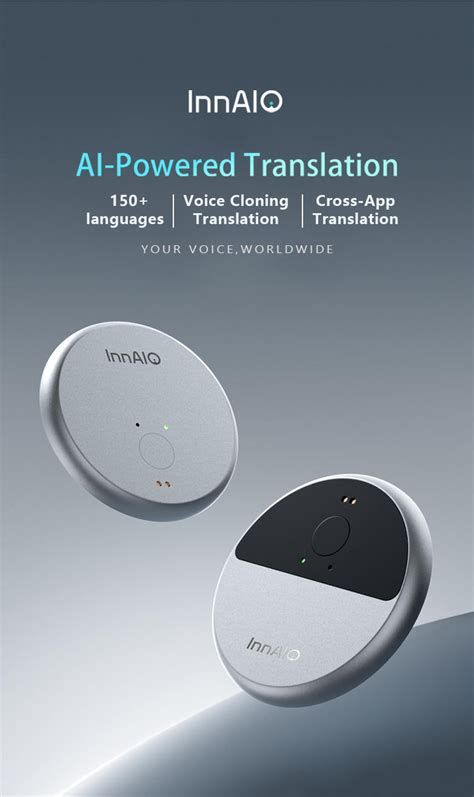
The Innaio Ai Translator T9 is positioned as a compact, conversation-focused gadget whose primary purpose is fast, accurate language conversion and live interpretation. It targets travelers, international business professionals, language learners, and frontline service workers who need immediate, portable translation support.
The Kindle Scribe Colorsoft 2025 is an evolution of the digital notepad/e-reader category. It is designed first for reading and long-form annotation on a paper-like display, with added color support and a stylus-optimized interface. The device appeals to readers, students, researchers, and creative professionals who prioritize reading comfort, note-taking fidelity, and the broader content ecosystem associated with a major e-reader platform.
In-depth product analysis
Innaio Ai Translator T9 — Detailed review and practical uses
Design and form factor: The T9 is compact and lightweight, generally pocketable, and built for one-handed use. Its hardware typically emphasizes microphone quality, speaker clarity, and a touchscreen or tactile controls for quick language selection. Ruggedized or splash-resistant versions are common for travel-ready models.
Translation capabilities: The central value of the T9 is conversational AI. It usually supports bi-directional speech-to-speech translation across dozens of languages, often with specialized models for tonal languages and regional dialects. Many modern translator devices combine cloud-based models for high-accuracy output with on-device fallback models to handle areas with poor connectivity. For buyers, the important factors are supported languages, latency, contextual accuracy (idioms, tone), and the ability to handle ambient noise.
Connectivity and software: Typical connectivity options include Wi‑Fi, Bluetooth, and occasional 4G/LTE in higher-end variants. Companion apps for smartphones may offer transcript export, phrasebooks, and offline language packs. Software updates affect translation quality over time; therefore, a healthy update policy is a meaningful advantage.
Discover deals on Laptops & Computers — updated daily.
Browse Now →Battery and portability: Battery life on translators tends to prioritize short bursts of intensive processing rather than continuous screen-on time. Buyers who travel should weigh battery capacity, charging standards (USB-C), and whether power banks can easily recharge the unit.
Real-world use cases: Typical scenarios include negotiation and customer service in unfamiliar languages, tourist interactions, emergency medical intake, and classroom language exercises. The device shines when both parties speak alternately and need near-real-time clarification without relying on a phone.
Kindle Scribe Colorsoft 2025 — Detailed review and practical uses
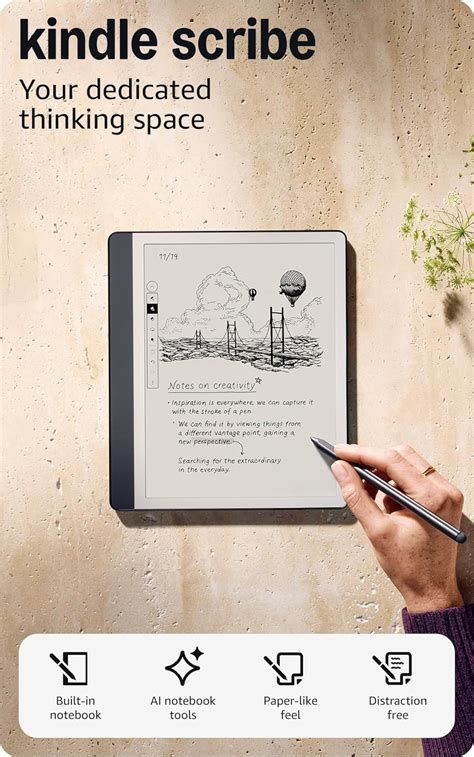
Design and form factor: The Kindle Scribe Colorsoft 2025 continues the large-screen, low-power e-ink tradition but with expanded color capability for diagrams, highlighting, and richer PDF rendering. The chassis emphasizes a comfortable reading angle, a textured stylus, and a screen size that balances portability with legibility for PDFs and textbooks.
Reading and display: The Colorsoft panel is tuned for long-term reading with minimal eye strain. Color support is intended for annotations, magazine layouts, and educational materials rather than vivid multimedia playback. The display typically maintains e-ink advantages: reflectivity in bright light, long battery life, and a paper-like feel.
Note-taking and stylus experience: Where the Kindle Scribe line differentiates itself is in pen-to-paper mimicry and integration with a content ecosystem. The 2025 model's stylus and software aim to provide low-latency strokes, multiple pen tools, and organizational workflows (notebooks, tags, export to common formats). For students and professionals, accurate handwriting recognition and the ability to export notes are critical.
Content ecosystem and software: A large part of the Scribe’s appeal is access to a mature ebook and document ecosystem—libraries, personal document conversion, and synchronized notes across devices. Buyers often value synchronization (cloud backups), a wide catalog of reading material, and a mature set of reading utilities (dictionary, highlights, web clipping).
Looking for the best Laptops & Computers deals on Amazon?
Browse Now →Real-world use cases: The Scribe is best for sustained reading, research with heavy annotation, academic study of textbooks, and creators who draft or sketch ideas in a distraction-minimized environment. The device is less about instant conversation and more about reflective productivity.
Pros & Cons
Innaio Ai Translator T9
- Pros: Extremely portable; optimized for speech-to-speech translation; low-latency in conversation mode; often supports offline language packs; designed for noisy, real-world environments.
- Cons: Limited as a primary reading or productivity device; smaller screen for text review; dependent on language model updates; may require cloud access for best results in some languages.
Kindle Scribe Colorsoft 2025
- Pros: Exceptional reading comfort; robust note-taking and annotation features; long battery life thanks to e-ink; organizational features and cloud sync for documents and notes; improved color support for diagrams and textbooks.
- Cons: Larger and less pocketable; not optimized for live voice translation; color e-ink is typically muted compared with LCD/ OLED; ecosystem may favor purchased or proprietary formats for some advanced features.
Side-by-side comparison
| Feature | Innaio Ai Translator T9 | Kindle Scribe Colorsoft 2025 |
|---|---|---|
| Primary purpose | Real-time spoken translation and interpretation | Reading, annotation, and long-form note-taking |
| Display | Small touchscreen (optimized for quick menus) | Large color e-ink display (paper-like, high-contrast) |
| Input | Microphones, speaker, touch/buttons | Stylus (pressure-sensitive), limited touch navigation |
| Audio | High-quality microphones and loudspeaker optimized for conversations | Basic speaker; primarily silent reading and pen input |
| Offline capability | Often offers offline language packs for core languages | Fully functional offline for reading and note-taking; cloud sync when online |
| Battery life | Moderate—designed for bursts of use | Very long—days to weeks depending on usage thanks to e-ink |
| Connectivity | Wi‑Fi, Bluetooth, sometimes LTE | Wi‑Fi, optional cellular models in some lines |
| Best for | Travelers, interpreters, customer service staff | Students, researchers, professionals who annotate and review documents |
Buying guide: How to choose between them
Choosing between the Innaio Ai Translator T9 and Kindle Scribe Colorsoft 2025 depends on use case, priorities, and workflow. The following checklist helps potential buyers evaluate which device matches their needs.
1. Clarify the primary use case
- If the need is rapid spoken translation during travel, meetings, or customer interactions, prioritize a dedicated translator such as the T9.
- If the need is extended reading, studying, annotating PDFs, or sketching notes, the Scribe Colorsoft aligns better with those priorities.
2. Consider portability vs. screen real estate
- Portability: The smaller translator is easier to carry and use on the go. It fits in a pocket or small bag and can be used while standing or walking.
- Screen real estate: The larger Scribe is better for textbooks, magazines, and documents that require comfortable on-screen layouts and precise note placement.
3. Evaluate offline needs and privacy
- Offline translation capabilities are essential when traveling in places with limited connectivity. Confirm the languages that can be used offline and the size of offline packs.
- For sensitive conversations, look for models that explicitly support on-device processing to minimize cloud transmission of audio and transcripts.
4. Audio and microphone quality
- Translation accuracy depends heavily on microphone quality and noise suppression. For frequent use in crowded environments, prioritize models with multiple mics and directional noise reduction.
- The Scribe’s audio features are secondary; if audio is important for podcasts or voice memos, verify speaker and mic capabilities before choosing it.
5. Battery life and charging
- Review manufacturer claims with caution and consider typical usage: translators tend to be used in short sessions, while an e-ink reader can last much longer between charges.
- Look for USB-C charging and support for fast charging or power banks if travel continuity is crucial.
6. Ecosystem and file support
- For study or professional workflows, check supported file formats, export options, and integration with cloud services or note apps.
- Translator devices usually offer transcript exports and phrasebook sync; make sure formats (PDF, TXT, CSV) match the buyer’s workflow.
7. Stylus and handwriting recognition
- The Scribe’s stylus performance and handwriting recognition are decisive for buyers who turn notes into editable text. Test latency, palm rejection, and export quality if possible.
- Translators rarely offer serious stylus functionality; if occasional note-taking is needed alongside translation, check whether the T9 supports any basic text entry.
8. Longevity, updates, and support
- Software updates materially affect AI-based translation accuracy and reading app stability. Prefer manufacturers with a track record of regular updates and responsive support.
- Warranty terms and the availability of replacement parts (stylus tips, chargers) influence long-term ownership costs.
9. Price and total value
- Compare the total value the device provides in the context of its primary purpose rather than headline price alone. A translator that saves time and reduces communication friction can be more valuable than hardware specs alone.
- For readers and note-takers, consider accessory costs (covers, stylus upgrades, storage expansion) when calculating the total spend.
Real-world examples and scenarios
To make the choice concrete, consider the following buyer personas:
- International consultant: Needs reliable, discreet translation during client calls in cafés and small meetings. The Innaio T9’s compact profile and real-time speech handling are ideal. Offline language packs and privacy-focused on-device processing may be decisive.
- Graduate student: Reads dense PDFs, highlights key passages, and exports notes to a citation manager. The Kindle Scribe Colorsoft 2025 offers superior reading ergonomics, larger display for multi-column PDFs, and robust annotation workflows.
- Traveling teacher: Alternates between preparing lesson plans and interacting with parents in different languages. A combination could be useful: the Scribe for lesson planning and the T9 for live parent-teacher conversations.
- Field medic or NGO worker: Encounters language barriers in the field; requires quick, reliable phrase-level translation and the ability to keep local records. The translator’s speech-first design and offline packs are practical; ruggedness and battery considerations are critical.
Decision checklist (quick)
- Require live speech translation most of the time → Innaio Ai Translator T9
- Require long reading sessions, precise annotations, or textbook PDF handling → Kindle Scribe Colorsoft 2025
- Need both, but budget is limited → Prioritize the primary daily task or consider owning both if workflows justify the expense
Conclusion
The Innaio Ai Translator T9 and the Kindle Scribe Colorsoft 2025 occupy different parts of the device spectrum. The T9 is a conversation-first tool built to remove language barriers in situ, while the Scribe Colorsoft 2025 is a reading-and-writing instrument designed for deep work and study. Buyers should match device strengths to daily tasks: choose the translator for real-time communication and the Scribe for reflective reading and annotated research. For many users, the question is not which device is better overall, but which one better supports the concrete workflows they encounter most often.