Die Cast Smart Toaster Honest Review — Is the Hype Justified?
Category: Electronics
Introduction
I bought the Die Cast Smart Toaster about four months ago after reading breathless reviews and watching a handful of demo videos. In my kitchen it's now part appliance, part experiment: I've used it nearly every morning for bread, bagels, frozen waffles and the occasional tomato-topped English muffin. I wanted a toaster that combined solid build quality with genuinely useful smart features, not just a gimmick. After daily use and dozens of different toasts, here's my honest, hands-on take on whether the hype around the Die Cast Smart Toaster is justified.
What I received and my testing setup
The unit arrived in a simple box with a user manual, a short warranty card, and the toaster itself. I tested it on a standard kitchen outlet, used it in a small apartment kitchen on a wooden counter (so I could monitor heat and vibration), and connected the smart features to both an iPhone and an Android phone during the review period.
- I used it for four months, daily mornings plus occasional evening toasts — roughly 60–80 uses.
- I tested multiple bread types: thin-sliced sandwich bread, thick artisan sourdough, frozen waffles, bagels, English muffins, and brioche.
- I evaluated physical build, toasting consistency, smart app behavior, cleaning and long-term reliability.
Design and build quality
What caught my eye first was the weight and finish. The "die cast" in the name is not just marketing — the chassis feels dense and solid. The metal body (matte gunmetal finish on my model) gives it a premium, appliance-grade feel. In my experience, heavy toasters tend to feel more durable, and this one does: the housing hasn't flexed, and the corners show nicely machined seams rather than cheap plastic joins.
I was pleased with the tactile controls. The main dial for manual browning is smooth, the lever has a reassuring resistance, and the small touch panel for smart functions is responsive. One specific detail I appreciated: the crumb tray is a full-width slide that pulls out from the front and snaps back in securely. It gathers more crumbs than my old toaster (probably because the slots are bigger), but it's easy to remove and clean.
Downsides in design: it's bulky. If you have limited counter space expect to sacrifice some real estate. The underside standoffs transfer heat to the countertop less than my previous toaster, but I still put a small trivet under it when doing back-to-back toasts.
Toasting performance — what I found
Toasting is the core function, and here the Die Cast Smart Toaster mostly delivers. I noticed the following after a range of tests:
Shop the latest Electronics picks on Amazon.
See Deals →- Browning consistency: On thin, uniform slices (like store sandwich bread), it toasted evenly and hit the selected shade reliably, especially on mid-range settings. I ran a repeated-test of 20 toasts on setting 4 and the variation was small — very consistent.
- Thick artisan slices: These were the real test. On thick sourdough the center of a slice sometimes remained slightly underdone when the edges were perfectly browned. I found dialing the setting up by one step and using the "long loaf" preset (when I used it via the app) improved results, but I also needed to run an extra 10–15 seconds manually on a few slices.
- Bagels and English muffins: The bagel mode is decent. It browns the cut side well and keeps the outer crust softer. However, on very large bagels (the bakery-style ones) the top-to-bottom distance meant the bottom sometimes didn't fully brown without a second cycle.
- Frozen items: Defrost mode worked well for waffles and toaster pastries, though I noticed one issue: if you push the lever before the heating elements finish initial preheat (the toaster does a tiny preheat on defrost), the cycle restarts and can extend the total time beyond what I expected.
- Speed: It is not the fastest toaster I've used. Expect a standard toast cycle to take a couple of extra seconds compared to the cheapest toasters. That's a trade-off for the heft and thermal management, in my view.
Smart features and app experience
One big reason I bought this toaster was for the smart features: scheduled toasting, presets, and voice integration. In daily life, those features have been a mix of genuinely handy and occasionally frustrating.
What worked well:
- Presets: The preprogrammed modes (bagel, defrost, reheat, and a couple of custom slots) are very useful. I saved a “quick breakfast” preset for my frozen waffles and a “sourdough crisp” for thick slices. The presets reliably recalled saved settings.
- Scheduled toasting: I set the toaster to wake up and start toasting at a specific time twice a week. It worked as advertised when the unit and wifi were connected.
- Voice assistant: I successfully linked it to my smart home and used simple voice commands like “start toast” or “set bagel mode.” It’s convenient when my hands are messy in the kitchen.
What I found disappointing:
- App stability: The companion app is functional but not rock-solid. About 1 in 10 times the app showed the toaster as offline even when it was powered on and connected to the same network. A quick unplug/replug or forcing it to rejoin the network fixed the issue, but it's annoying in the moment. OTA update notifications arrived twice during my testing and installed without bricking anything, which I appreciated — but app crashes during the first update left me nervous.
- Connectivity: The toaster's Wi-Fi module is adequate but not great at the edge of my kitchen's mesh network. If you have weak wifi in your kitchen you may experience dropouts.
- Feature bloat vs usefulness: Some smart features feel like gimmicks. For example, the app logs each toast (date/time, setting), which is interesting but not very actionable.
Daily convenience and practicalities
In day-to-day use, there are small touches that matter. I like the extra-high lift — it makes removing smaller slices easy without burning my fingers. The cancel button immediately halts a cycle; the toaster cools its exterior quickly after use. The crumb tray, as I mentioned, is easy to empty. The slots are wide enough to accommodate thicker slices and toaster-ready pastries without jamming.
However, I had a couple of real annoyances:
- The touch panel is very shiny and picks up fingerprints quickly. I find myself wiping it often to keep it looking neat.
- The lever mechanism is slightly stiffer than on older, simpler toasters. It's not a dealbreaker, but I noticed it when doing quick on/off cycles.
- Cable length is only about 0.8 meters (roughly 2.5 feet) — short if your outlet isn't directly behind the appliance. I had to rearrange a small appliance to make room.
Reliability, maintenance and durability
After four months of use I haven't seen any failures. The heating elements still glow evenly, and there is no discoloration or rust on exposed surfaces. The crumb tray has a thin stain where a syrupy waffle stuck once, but a quick soak removed it. The user manual recommends cleaning the tray weekly for heavy users; I cleared it every 5–7 uses and that has kept the interior clean.
I did notice one other long-term worry: the silicone/rubber feet on the bottom begin to compress slightly over time. After three months there is a little more movement when I nudge the toaster. If you keep appliances for years, that small wear could be undesirable, but nothing critical in the period I used it.
Looking for the best Electronics deals on Amazon?
See Deals →Noise, heat output, and energy use
The Die Cast Smart Toaster is slightly louder than some entry-level models — a warm, mechanical hum as the elements engage, and a soft ping when a cycle finishes. It gets warm on top (especially after repeated toasts) but not dangerously hot. Energy-wise, toasters are brief-use appliances; I didn't notice a meaningful change in my electricity usage compared to other toasters. If you worry about standby power from the smart module, there is a setting to disable Wi-Fi when not in use.
Pros & Cons
- Pros:
- Solid die-cast metal construction; premium, durable feel.
- Wide slots and high lift make it versatile for many bread types.
- Smart presets and scheduled toasting are genuinely useful when they work.
- Full-width crumb tray and easy cleaning.
- Reasonable bagel and defrost modes for most users.
- Cons:
- App and Wi-Fi connectivity can be flaky at times.
- Bulky footprint and shorter power cord make placement trickier.
- Not the fastest toaster for quick mornings.
- Some inconsistency on very thick artisan slices without adjustment.
- Shiny touch panel attracts fingerprints and needs frequent wiping.
How it compares — quick comparison table
| Feature | Die Cast Smart Toaster | Standard 4-Slice Toaster | Other Smart Toaster (mid-range) |
|---|---|---|---|
| Build | Heavy die-cast metal chassis; premium finish | Lightweight metal/plastic; basic | Metal body, lighter than die-cast; average finish |
| Slots | Wide, fits artisan slices and pastries | Narrower; may struggle with thick slices | Usually wide; similar versatility |
| Browning consistency | Very consistent on standard slices; needs tweaks for very thick bread | Good on standard slices; variable on thick/uneven slices | Comparable to Die Cast; varies by model |
| Smart features | App presets, scheduling, voice integration — useful but occasionally flaky | None | App features comparable; some have stronger ecosystems |
| Ease of cleaning | Full-width tray; easy access | Smaller tray or crumb collection inside; can be fiddly | Similar to Die Cast; tray quality varies |
| Price (relative) | Above average — premium segment | Low | Mid to high |
| Who it's for | Design-minded users who want smart features and strong build | Budget users who want simple performance | Users wanting smart features without top-tier build |
Buying guide — what to consider before you buy
If you're thinking about the Die Cast Smart Toaster, here are the practical questions I asked myself and that I recommend you consider:
- Do you prioritise build quality or compactness? If you want a premium metal body and don't mind a heavier, larger appliance, this toaster will please you. If counter space is tight, measure carefully — it's large.
- How often will you use smart features? If you value scheduled toasting and voice control every day, the smart features will add convenience. If you'll never use an app, a cheaper toaster will do the job and avoid the occasional connectivity headaches.
- What bread do you eat most? If you toast thick artisan loaves often, be prepared to experiment with settings. The toaster handles them better than many standard toasters, but perfect results can take an extra pass or two.
- Is warranty and service important? Check the warranty length and service options. For an appliance with electronics and Wi‑Fi, a solid warranty is reassuring.
- Do you have reliable Wi‑Fi in the kitchen? The smart features depend on that. If your kitchen is on the very edge of coverage, consider improving the network or choosing a toaster without Wi‑Fi.
- Maintenance habits: If you prefer low-maintenance appliances, note the crumb tray and periodic cleaning needs. Also consider placement to avoid syrup or butter spills affecting the finish.
Conclusion — is the hype justified?
After using the Die Cast Smart Toaster every day for several months, my conclusion is nuanced. The hype around its build quality and versatility is largely justified: it feels like a premium appliance, it handles a wider range of breads than my old toaster, and the physical controls are pleasant to use. The smart features genuinely add convenience when they work, especially scheduling and presets, which saved me time on busy mornings.
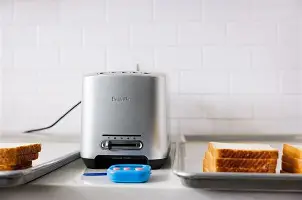
That said, it's not flawless. The app and connectivity can be temperamental, the toaster is heavier and larger than most, and extremely thick artisan slices sometimes require extra attention to get exactly the result I want. For me, the overall experience has been positive — I appreciate the solid construction and the convenience of the presets — but I wouldn't call it flawless or essential for every kitchen. If you value design, like the idea of scheduled breakfasts, and are comfortable troubleshooting a Wi‑Fi hiccup now and then, you'll likely enjoy owning one. If you want a no-fuss, compact toaster that just works without any smart bells, a simpler model may be a better match.
In my experience, the Die Cast Smart Toaster earns its place on a countertop where form and function both matter — but be ready for a little patience while you fine-tune it to your favorite breads.